Friday, September 7, 2012

still-sound 103. What I saw in Coronado


Last week I spent a few days in Coronado, a little island just over the bridge from San Diego.  My mom came out from Arizona to meet me there.  In the early evening she would sit in front of the tv, resting from our day's outing.  I would head over to the beach, only a couple of blocks away, to walk on the sand. 

I like the way the beach sounds.  Muffled.  The waves sound distant although they are not.  When I stood at the very edge of the ocean and kept my balance as the peripheral vestiges of the Pacific gathered around my feet, I looked at the color of the water and could vividly imagine its saltiness.  The taste filled my mouth.

Tuesday, September 4, 2012

still-sound 102. Transition (part 2)


A gift economy is based on the principle of giving when you can give and receiving when you need.  It's not bartering.  It's not tit-for-tat.  It's a flow of resources based on the trust that surplus and deficit continually level out and that social norms and customs will govern the exchange.  In The Gift (1979), Lewis Hyde explores the history of gift economies, focusing mostly on indigenous cultures.  This structure of exchange seems to best suit communities that place a strong emphasis on interpersonal relationships: families, friends and neighbors.  This is rarer in a globalized, technical world where, despite the ease in communicating and sharing - as members in a global society, we feel more isolated and protective than ever.  Lewis Hyde finds traces of the gift economy in the arts and sciences where ideas and work are offered without a guarantee of monetary compensation for the sake of a free flow of information.

Charles Eisenstein makes reference to Lewis Hyde's work.  He refers to gift economies in his own ideas vis a vis money.  He writes about the sacred and his impulses as a human being to protect what he considers sacred. He finds that these impulses constantly get curtailed by the flow of money in our society -- a flow that eventually promotes the very things he considers unsacred like the destruction of our biosphere and the gross inequities in the division of wealth. 


In a fascinating conversation with Rob Hopkins, Eisenstein elaborates the major themes of his book, Sacred Economics.  You can read the transcription here:

http://transitionculture.org/2012/08/21/an-interview-with-charles-eisenstein-something-in-your-heart-knows-that-this-is-what-life-is-supposed-to-be-about/

As I seek more information about the Transition Network, even attending a workshop here in Los Angeles, I step back and worry about the public's perception of the movement.  I would hate for Transition to be dismissed as a hippy thing.  This association would keep keep many from taking Transition seriously.  I have no problems with hippies.  I have hippy tendencies myself, but I don't identify as one.  I find hippy culture homogenous and isolating.  You have to identify as a hippy to belong.  In actuality, I consider Transition as resolutely malleable and embracing.  One of its great strengths is its promotion of heterogeneity. 

A major reason why I would personally support a transition town rather than an intentional community is because I desire extreme examples of ingenuity.  I mean, local businesses and local food production, yes! Social justice and community involvement, yes!  But (not-so-great) hand-made crafts and (not-so-interesting) music played on acoustic guitars?  Hmmmm. 

I wondered how excellence factors into the Transition Town.  As an artist I try to make something that is beyond expectation.  Something that can only be made after enormous dedication and a modicum of skill.  I rarely succeed in this, but it's what I look for, not just in art but in many aspects of my life.  I look to Europe and Asia where certain towns or regions become synonomous with particular crafts or food products - where artisans are able to make things that seem beyond the capabilities of human hands. 

Although the following discussion between Hopkins and Eisenstein didn't directly address my concern, I did find this bit interesting:

Rob Hopkins: I asked if people had any questions, and one of the questions I was asked to bring was “in the gift economy, how do I get a piano?”, i.e. something that needs to be made by skilled people, something that’s using resources, and something on which people can express so beautifully and creatively.  Where do the pianos come from?

Charles Eisenstein: Sure, pianos, computers, all kinds of things. That’s just part of the misunderstanding, people think that I’m talking about a world without money. Maybe some day money will have evolved to a point where we don’t even recognise it as money. But basically I think that there has to be a way to co-ordinate human labour over vast social distances. Just like in a body how if a cell needs something it puts out a signalling molecule, and that molecule attracts the resources that it needs.

So I think in the social body, money is one of the signalling molecules that says – pianos are needed. And the signal is that people are willing to pay for pianos, so pianos are needed. So if I’m a craftsman, and I’m wondering whether to make a piano, or I’m an entrepreneur and I want to do something, I want to make something – shall I make pianos or shall I make pogo-sticks? Maybe there’s more money in the pianos. That’s maybe a signal from society that that’s maybe what we want. In a way money already works like that, that’s the theory of it.

The problem is that it’s become divorced from things that people actually want and need. I explained how that happened in the book with the way money’s created as debt, so it’s not about eliminating money, it’s about transforming its nature, for example, no longer creating it as debt


I was also interested in reading more about Eisenstein's views on the Sacred.  This is what he says...

Charles Eisenstein:  When I speak about it (the Sacred) I try to invoke it through pointing out some of the experiences that give me a sense of the sacred and that give other people a sense of the sacred. I think most people have experienced those moments. It could be a moment in nature or with a child, witnessing a birth or witnessing a death with a dying loved one, those special moments…or maybe even listening to a band play and there’s that moment of connection, where the band is really singing to you somehow, and not just putting on a performance. I think during these experiences when your real needs are being met, shopping is the farthest thing from your mind.

It seems absurd, and wouldn’t you like more of that? Or those moments of authentic intimate communication with somebody. So I’ll invoke that and say something in your heart knows that this is what life is supposed to be about.

***

Rock on Charles!  Rock on Rob! 

Saturday, September 1, 2012

still-sound 101. Transition (part 1)


I just read the transcription of an interesting conversation between Rob Hopkins and Charles Eisenstein.

I've been following Rob Hopkins for a number of years now.  He's one of the main voices of the Transition Movement.  The movement seeks to address the way we live and to shift our societies into ones that are resilient and ultimately independent of cheap oil.  Peak Oil, the movement's impetus, is the notion that the demand for oil will only increase in the future as supplies remain level or decline (which may already be the case).  The rise of controversial methods like fracking already suggests that oil is not as readily available as in the past.

It's a simple idea but no small task.  Virtually every aspect of our daily lives is pulsing with a blood supply of cheap oil.  Transport of food, food production, travel and the endless consumption of disposable tat.  Every fiber of our economy and politics is deeply connected with the oil supply.  No wonder endless wars are fought. 

Transition towns are popping up all over the world.  They seek to strengthen local businesses and food production.  In some instances they introduce local currencies to keep the exchange of money within the community.  For example, in Totnes, Devon you can pay for your pints at the pub with Totnes pounds.  The big things, like mortgages are still sold in Sterling.  In addition to strengthening the local economy, these efforts help to foster a sense of community and personal accountability.

Of course it's not just about the economy and politics.  Our very identities are influenced by the consumer-oriented dream machines; advertising and entertainment, all dependent on the supply of oil.  It's a cultural transition as much as anything else.

When you read details of these town 'in transition' they don't come across as particularly radical.  They're not hippy communes.  They are ordinary places where people live and work.  The changes are small and incremental; appearing in business, personal choices and local government.  The transition towns share an underlying goal of shifting everyday life towards sustainability and equality. 


What I like most about the transition movement is that it's practical and gentle. Rob Hopkins is soft-spoken and comes across as thoughtful and, well, ordinary.  The pervading attitude of Transition can be defined as 'let's get on with it'.  In our culture of haters, it's easy to criticize ideas that posit solutions whether major or minor.  Poking holes without offering an alternative solution leads to paralysis, yet is so frustratingly commonplace.  Transition towns do not offer a meta-solution to all of the world's ails and injustices but they are a practical model.  There will have to be many practical, functioning models in place to make a substantial difference.*  What's important though, is that we simply 'get on with it' and start living the life we think is the right one to live.

Here in the US, the media is saturated with campaign rhetoric.  Personas are crafted to exude determination and dominance.  We are supposed to vote for a Fixer - a strong-handed, no bullshit leader.  Inconceivable amounts of money fuel this smoke and mirrors.  The reality though, is that nothing gets fixed.  Obama, Romney and Congress will change nothing.  Ordinary people with an unwavering determination to make their communities better, will make the change.   

I read transitionculture.org to be kept current with the activities of transition towns around the world.

I will talk about the actual interview between Rob Hopkins and Charles Eisenstein in the next post.

* In fact, it's hard for me to imagine Los Angeles going into transition.  It's a city that was built around cars and cheap oil.  The city would essentially have to redefine itself from the ground up.  Most European towns developed before the advent of the automobile and the addiction to oil.  They were already sustainable and their planning reflects this (eg. town hall, a central commerce area, market halls, proximity to farmland).  Los Angeles and much of America that quickly developed into the wide open continent and came into their own after the Industrial Revolution have their own unique set of challenges.

Friday, August 31, 2012

still-sound 100. Blue Moon


Tonight there will be a blue moon.  All this means is that it's the second full moon in a calendar month.  I wished that it meant that the moon, for one night, glowed blue.

I will celebrate this event, something that only occurs once in a blue moon, by lighting a stick of Fu In Kyara incense by Minorien.  The little kiri wood box bearing a deep teal blue label is beautiful.  The sticks sleep in a bed of soft, lacy paper.  The first time I burnt this incense I thought it smelled like patchouli.  I suppose I still do.  But there's so much more.  It's very earthy and damp and woodsy.  It's not what I expect from a kyara stick.  It's less sweet and a little spicy.  I think it's the appropriate scent for a blue moon.

Tuesday, August 28, 2012

still-sound 99. Fruit


Look at this fruit salad I made.  I've been making them throughout the summer.  Once a week.  They all have melon and pineapple.  And a couple of oranges thrown in too.  This particular one has green seedless grapes.  In the past I've included cherries which required slicing and pitting - too much work for the final product.  Cherries are better eaten on their own. 

I once added peaches but chose not to do so again.  The peaches I bought had little flavor and when added to the other fruits, became mushy. 

I throw all of the sliced fruit into a big shino-glazed bowl.  

Friday, August 24, 2012

still-sound 98. Ted Gontarski


This picture is for my Dad.  It would have been his birthday today.  I started drawing birds because of him.  He knows why.

Wednesday, August 22, 2012

still-sound 97. Notebooks


If I were kid, I would most certainly have my back-to-school supplies bought by now.  In fact, one of my highlights of summer vacation would be the trip to K-Mart to buy a new Trapper Keeper, pencils and folders. 

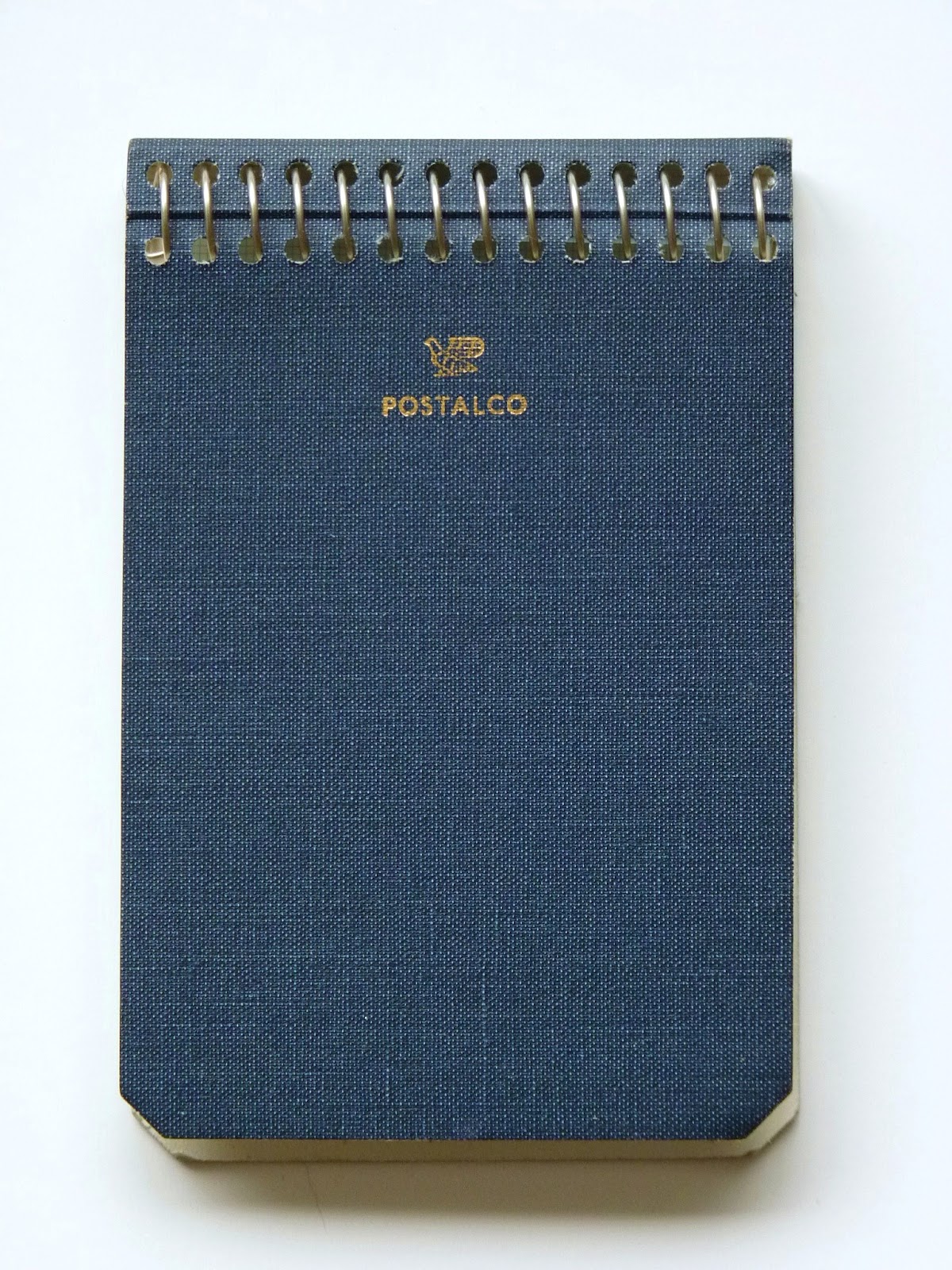
I still have a fetish for stationary.  Maybe it's because I'm half Asian.  Asians tend to love notebooks, stickers, erasers, pens and paper.  In fact my preferred stationers right now, Postalco, is now based in Japan, having gotten its start in Brooklyn.

Look at the little insert that comes inside a Postalco notebook.


If you're anything like me, you'll know how exciting this is.  You'll also love how the notebook paper is light blue and graphed.  I got a small notepad to jot down useful bits of information.  Like how to set the aperture and time on my camera when it's in manual mode.


I recently wrote down the names of Northern Soul songs that I wanted to try and find on record.  I hope the list grows but I know that it probably will not because I always forget that I'm even keeping a list of Northern Soul songs that I'd like to find on record.


Whenever I visit France I pick up some Rhodia notebooks, for myself and to give as gifts.  I realize that they're for sale at Blick's, two blocks away from my work on Beverly Blvd, but still, I bring them back from France in my suitcase as though they were exotic spices or fine silk.


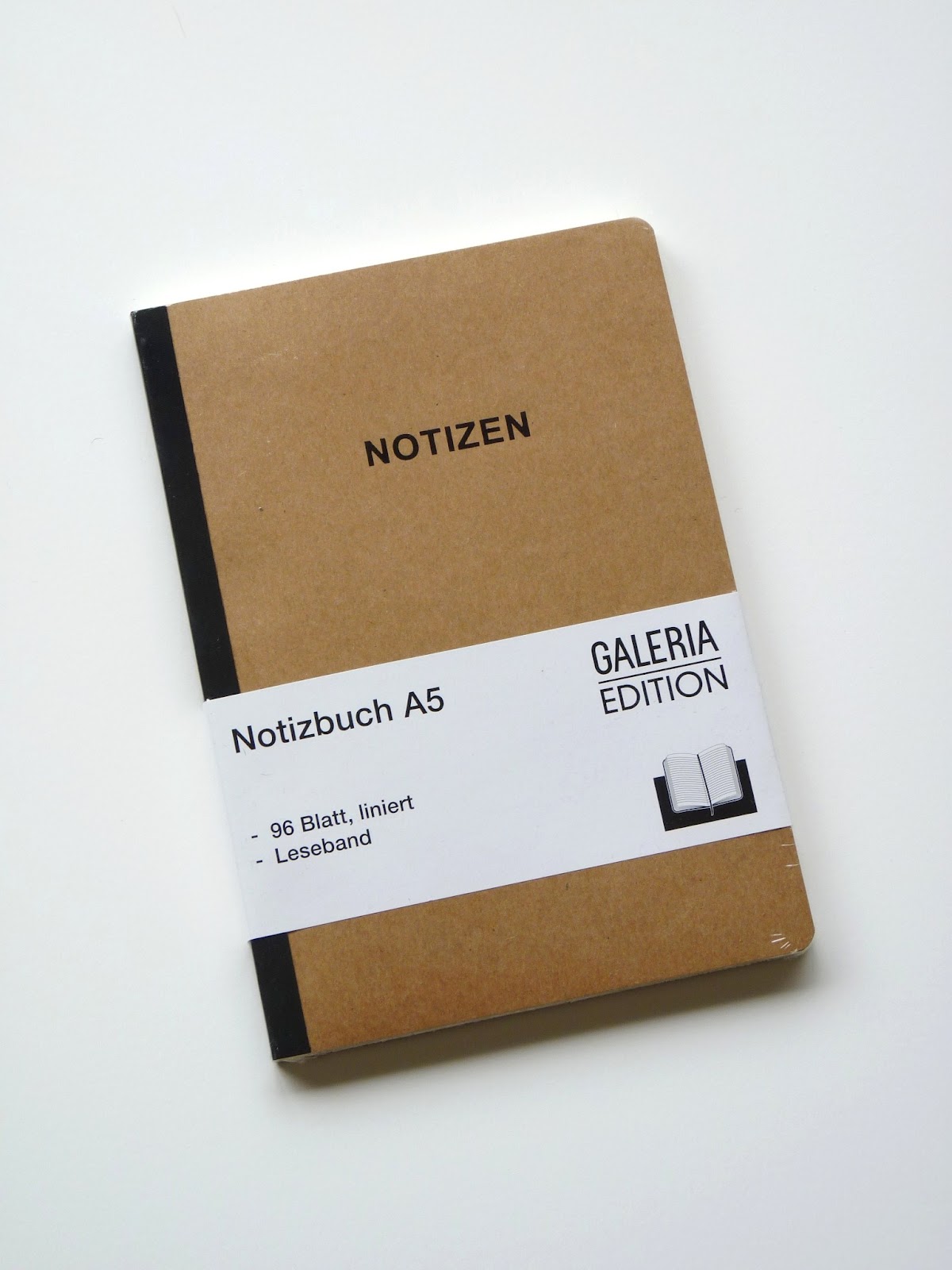
Rob gave me this notebook when he came back from a recent trip to Munich.  He got it at Galeria Kaufhof.


It's still sealed in plastic.  I have no idea what I'll use it for.  It'll stay in plastic until I think of something.